
Start choosing a silo level sensor by defining the measurement objective. A point level switch serves overflow or empty alarms; continuous level measurement tracks material height and stock changes. Many silos use both for different tasks.
Quick response
- First decide whether you need full/empty alarms or continuous inventory monitoring.
- Consider dust, bulk density, adhesion and particle size together.
- Keep the sensor away from the filling stream and direct material impact.
- Confirm ATEX selection against plant zoning, device nameplate and certificate.
- Radar measures level; tonnage calculations also require geometry and bulk density.
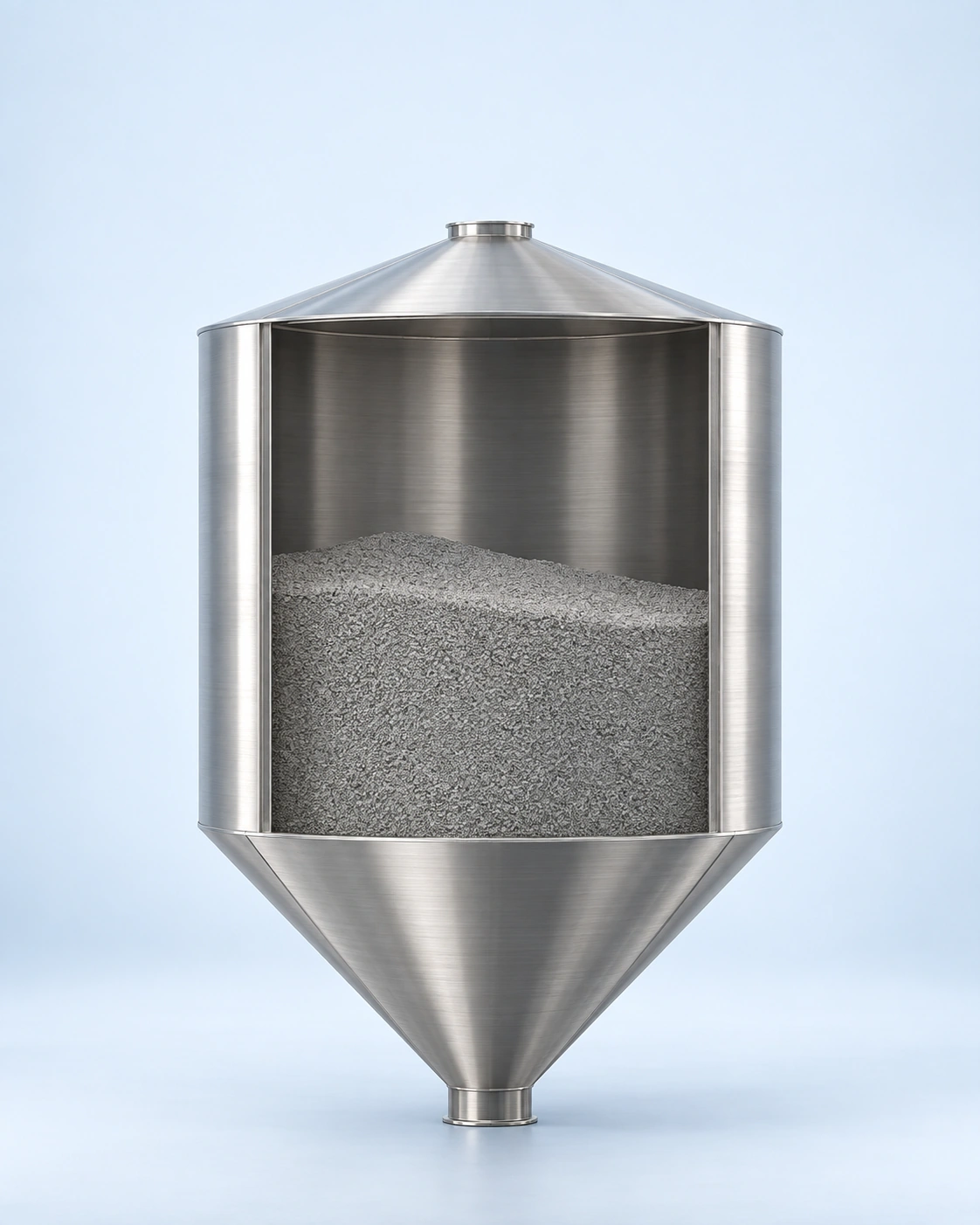 High level limitContinuous measurementLow level limit
How does point level differ from continuous level?
Point level
Indicates whether material is present at the sensor's position. Suitable for high-level limits, overflow alarms, low-level limits and process control.
Output: Present / absent at a defined pointContinuous level
Tracks the distance to the material surface or changes in fill level. Used for inventory monitoring and fill percentage.
Output: Level or change in fill levelUsed together
Continuous measurement provides operating information; a separate high-level switch gives an independent overflow alarm signal.
Separate these tasks in the control conceptFind the right sensor for your application
After defining your objective, start at the mounting point in the MOLLET selector.
How do you choose a silo level measuring principle?
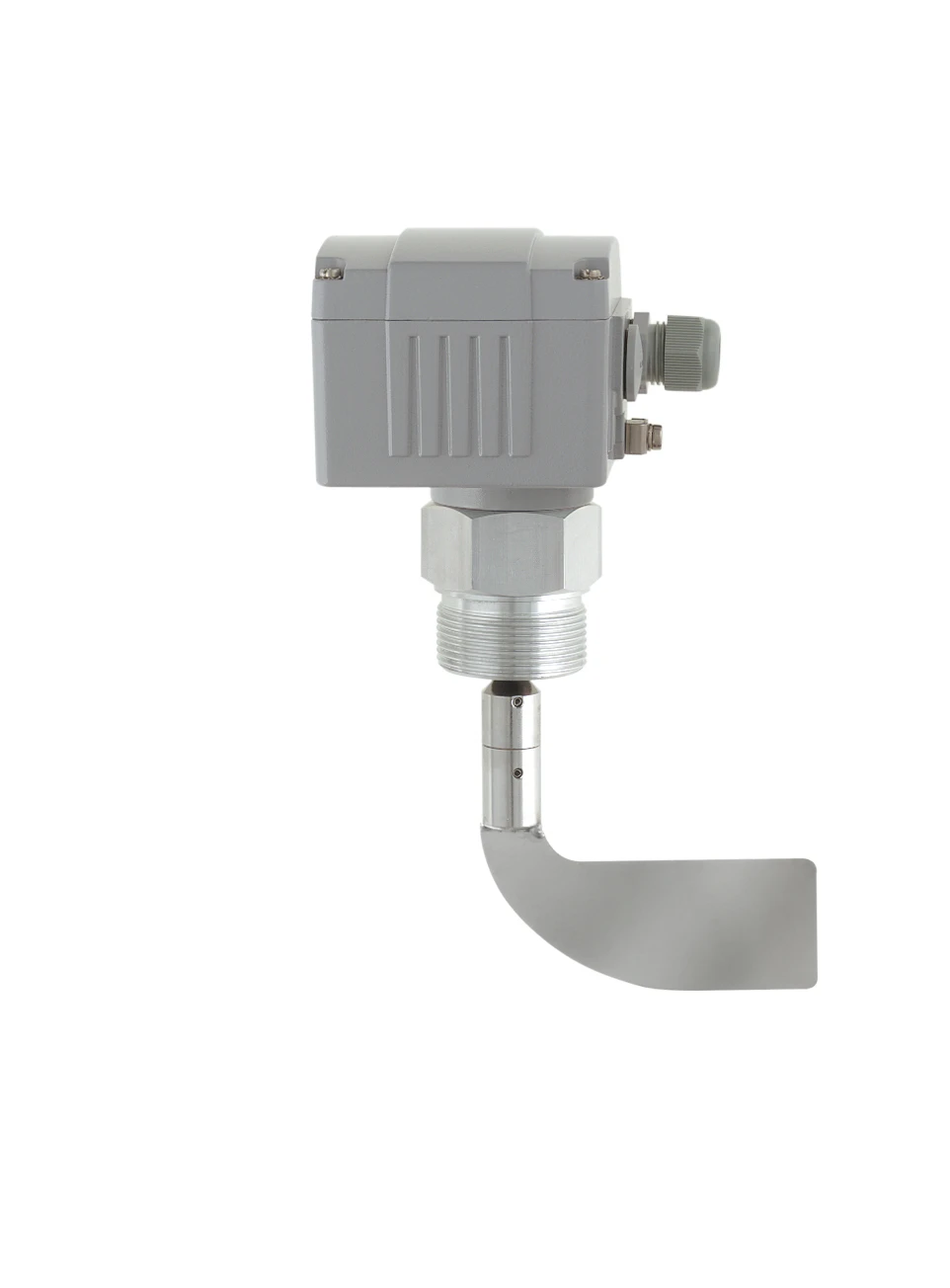
Motor-driven rotary paddle level switch
A motor turns a paddle inside the silo. When material stops the paddle, the device produces a switching signal. Assess bulk density, paddle geometry, mounting orientation and mechanical load on the sensor together.
Explore MOLLET level sensors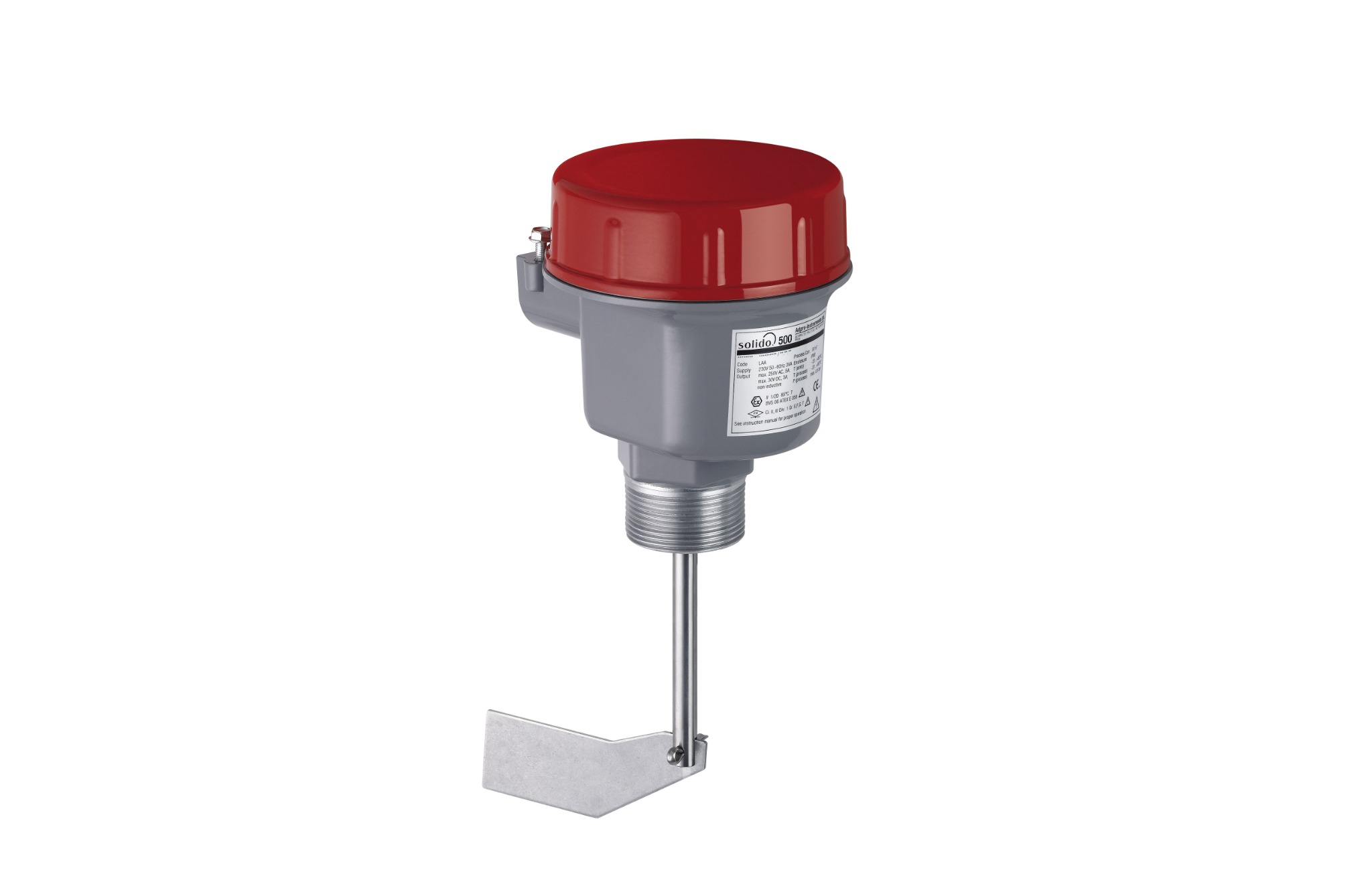
Other point level options
Vibrating and capacitive principles can also provide point level detection. Adhesion and buildup may affect sensor behaviour, so choose according to the material.
Level measurement options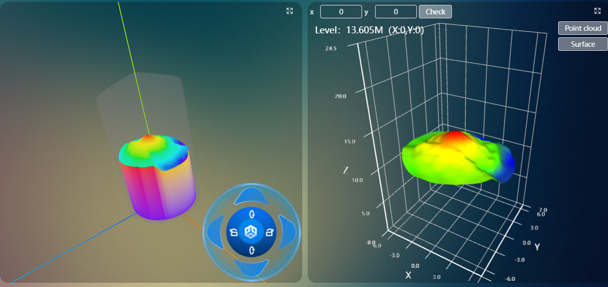
Radar and 3D measurement
Radar continuously monitors distance to the material surface. If an uneven surface, filling cone or discharge depression affects inventory estimates, consider multipoint or 3D surface measurement.
3D radar and LiDAR selection guideFactors affecting silo level sensor selection
Measurement objective
Overflow alarm, low-level warning, intermediate level, continuous level or approximate inventory calculation.
Material
Dust, bulk density, adhesion, particle size, flow behaviour and, for radar, dielectric properties.
Process
Temperature, pressure, filling method, vibration, silo geometry and explosive dust atmospheres.
Installation
Side or top mounting, process connection, insertion length, maintenance access and mechanical load.
Comparison of level measurement technologies
| Requirement or condition | Technology to consider | Check point |
| High level / overflow alarm | Rotary paddle or vibrating switch | Location, material behavior and mechanical load |
| Low level / empty warning | Suitable point-level switch | Flow in the cone and sensor loading |
| Continuous material height | Radar | Material measurability and mounting geometry |
| Fill percentage | Continuous level measurement | Empty/full references and silo geometry |
| Approximate tonnage | Level + geometry + bulk density | Density and surface shape may change |
| Irregular surface / volume | 3D measurement | Scan coverage, blind spots and geometry |
| Sticky material | Application-specific selection | Sensor buildup |
| Dense dust | Point switch or radar according to application | Dust effects on the measuring principle |
Which applications need detailed assessment?
Do not assume one measuring principle suits every cement, feed, flour, plastic granule, ash or sawdust silo. Assess material and layout together under the following conditions:
Common silo level sensor mistakes
Define the required output first. A switching signal is different from continuous level information.
Falling product may cause false alarms, wear or direct mechanical loading on the sensor.
Place the low-level sensor with regard to flow and load during discharge, not merely at the desired height.
Assess distance L between the process connection and target detection point together with the sensor's mechanical design.
Convert level or volume into estimated tonnage using silo geometry and bulk density; this is not direct weighing.
The plant determines its zone classification. Check the nameplate, certificate and explosion protection document together.
Final ATEX check
Assess the potential for explosive dust atmospheres in feed, flour, sugar, coal, fly ash and plastic dust applications. Request current plant documents instead of assuming the zones inside or outside the silo. Base the final decision on the selected order code's nameplate and certificate scope.
Technical selection support
Infomak combines current manufacturer information with application experience across industries to help select a suitable level sensor. Material properties, measurement objective, silo geometry, mounting position and process conditions guide the choice of technology and product.
Frequently asked questions
Is radar needed for a silo full/empty alarm?
No. A suitable point-level switch may suffice for a defined full/empty point. Consider radar for continuous level and fill-change monitoring.
Does radar directly show silo material tonnage?
Radar measures surface distance and thus level. Tonnage requires geometry and current bulk density; repose angle, surface and density changes affect results.
Which level sensor suits dusty silos?
Selection depends on more than dust. Assess density, adhesion, grain structure, temperature, location and objective together; check dense-dust effects on ultrasound separately.
Where is a rotary paddle switch mounted on a silo?
Consider side or top mounting for the target level. Keep away from filling flow, direct impact and inaccessible maintenance locations.
Can point and continuous level measurement be combined?
Yes. Continuous measurement shows stock/level changes; an independent high-limit switch can provide a separate overflow alarm. Define each duty clearly in control logic.
What is needed to select an ATEX level sensor?
Plant zone classification, dust properties, location, process temperature and connection conditions. Final selection uses nameplate, certificate scope and explosion-protection documentation.