Selecting a mass flow meter for bulk solids starts with conveying method and measurement objective, not brand or output signal. Pneumatic conveying, free fall, granular chutes and truck loading are different processes. MF 3001 / DYNA M-flow, DYNAmas, DYNAchute and DYNArad are therefore not four interchangeable products on a list.
Quick response
- For pneumatic conveying and free-falling powder, first consider MF 3001 / DYNA M-flow or DYNAmas.
- If product velocity changes substantially, DYNAmas may be preferable because it measures concentration and velocity separately.
- For vertical, vibration-free flow of non-powder granules, consider the patented DYNAchute.
- DYNArad uses gamma transmission and is the last option when other methods are unsuitable.
- 4–20 mA is only a signal standard; define whether the output represents a trend or calibrated kg/h.
A different process calls for a different measurement approach
Moving solids in an enclosed pipe are evaluated.
Classify your process with the product selector
Select the conveying method, material and measurement objective to start with a suitable product family.
Where should mass flow meter selection for bulk solids begin?
Even if the first question is “How many kilograms per hour?”, determine how the product moves before choosing a device. Dilute- or dense-phase pneumatic conveying, gravity free fall, a chute after a vibrating feeder and truck loading produce different velocity and concentration patterns. A device family may suit several processes, but its mounting point and calibration cannot be assumed identical.
The second distinction is the measurement objective. A flow present/absent sensor may suffice to detect stoppage; a relative flow trend may show increases or decreases. Recipe control, production records or totals need verified mass flow in kg/h or t/h. Confusing these objectives can lead to buying the correct sensor with the wrong expectations.
How do the four measurement approaches differ?
MF 3001 / DYNA M-flow
Evaluates microwaves reflected by moving solid particles in a metal pipe. For pneumatic conveying and controlled free fall, calibrate against a suitable reference for the product, line and operating point.
View product detailsDYNAmas
Measures material concentration and conveying velocity separately. This distinction matters especially when product velocity cannot be assumed constant.
View product detailsDYNAchute
The patented system combines mass in a weighing chute with contactlessly measured product velocity. Consider it for vertical, vibration-free free fall of a non-powder, free-flowing product.
View product detailsDYNArad
A radiometric approach using gamma transmission for density and a separate velocity measurement. Consider it if process conditions rule out the other three methods.
View product detailsMass flow meter comparison
| Solution | Measurement approach | Process | Commissioning | Preselection note |
| MF 3001 / DYNA M-flow | Microwave reflections from moving particles | Pneumatic conveying or controlled free fall | In-process reference calibration for product and line | Powders/granules with a stable representative section |
| DYNAmas | Separate concentration and product-velocity measurement | Pneumatic conveying or free fall | In-process reference calibration | Lines requiring separate velocity-change monitoring |
| DYNAchute | Combining chute mass and non-contact velocity | Vertical free fall | No product calibration per manufacturer; installation/acceptance checks required | Free-flowing non-powder granules |
| DYNArad | Gamma-transmission density and separate velocity measurement | Special processes unsuitable for other methods | Application-specific commissioning and validation | Only after excluding conventional options |
The table supports technical preselection. Confirm the product, variant and expected performance through manufacturer application review and current documents.
How does DYNAchute differ from an impact plate?
An impact plate directs product against a plate and derives flow from the resulting force. The result depends on incoming velocity, impact, friction and material properties. DYNAchute measures product mass in the weighing chute and product velocity separately to calculate mass flow. Despite mechanical similarities, these are different measuring principles.
Belt scale
Weighs material on an open belt. Belt design, tension, alignment and mechanical layout are part of the project; it is not the same as measurement inside a closed pipe.
Impact plate
Evaluates impact force. Requires a controlled incoming product direction and application-specific calibration.
Loss-in-weight
Tracks the loss of weight from a vessel or feeder over time. It requires a different mechanical arrangement and refill management from an inline sensor.
What technical information affects selection?
Pipe diameter or capacity alone cannot determine the device. The same nominal rate can produce different sensor signals and installation requirements for a light, fast-moving product versus a dense, slow-moving one. Assess a product datasheet, line drawing and, if possible, mounting photos before purchase.
Which applications are suitable, and which need additional review?
Suitable starting conditions
- A defined, repeatable conveying line
- Representative measuring cross-section
- Ability to perform reference weighing
- Product changes are recorded
- Need for real-time flow in process control
Separate engineering review
- Intermittent, uneven material surges
- Buildup or air gaps in the measuring section
- Frequent changes of product, moisture or recipe
- Insufficient straight length for mounting
- Expectations of custody-transfer weighing
Common selection and commissioning mistakes
Output standard does not define the quantity. Distinguish trends from kg/h-scaled signals.
Reassess mounting/calibration because velocity, concentration and distribution change.
An unrepresentative reference can increase error elsewhere in the range.
Moisture, density, grain structure or recipe changes may require curve checks.
This approach suits free-flowing non-powder product and suitable vertical chute geometry.
Technically exclude conventional options before radiometric measurement.
What results have been reported in manufacturer applications?
The following examples are published by DYNA Instruments, not Infomak field references. Results apply only to the respective material, mounting and commissioning conditions.
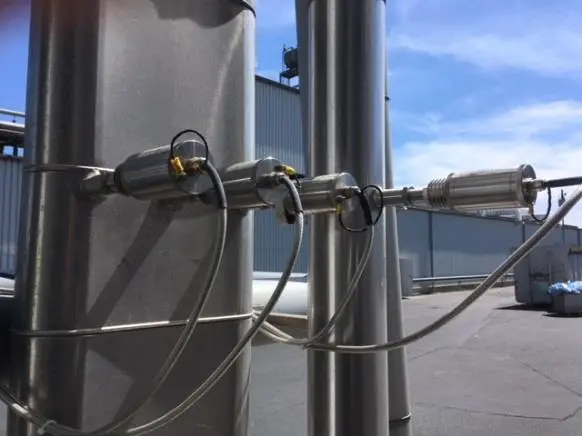
Pneumatic conveying of breadcrumbs
Four systems were used on a DN80 line at 0.5–1 t/h; the published result is approximately 2% accuracy.
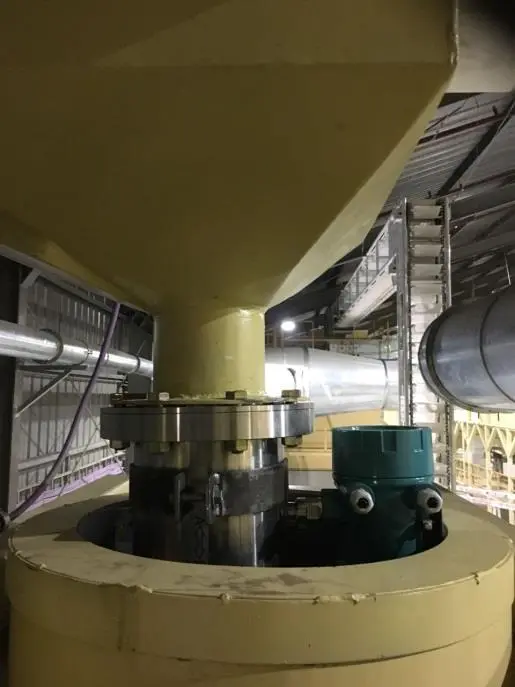
Free-falling shelled peanuts
For a DN150 line at 10–20 t/h, the published results were approximately 4% after factory pre-calibration and 1% after on-site calibration.
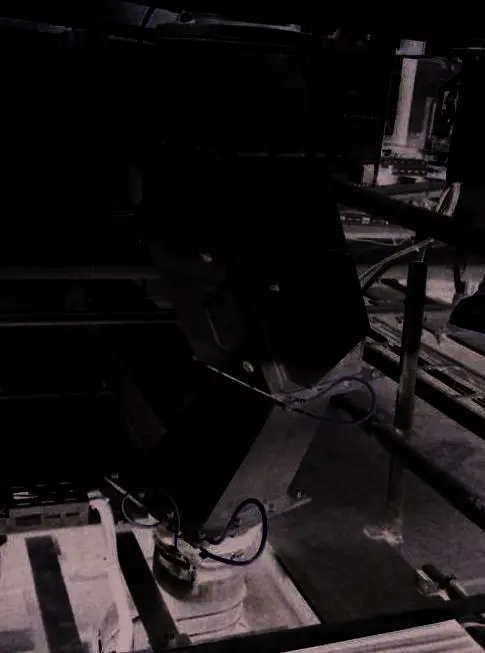
PBT plastic granules
For a DN200 free-fall line below a vibrating screen at 2.5–6 t/h, the published result is 0.97% of actual value.
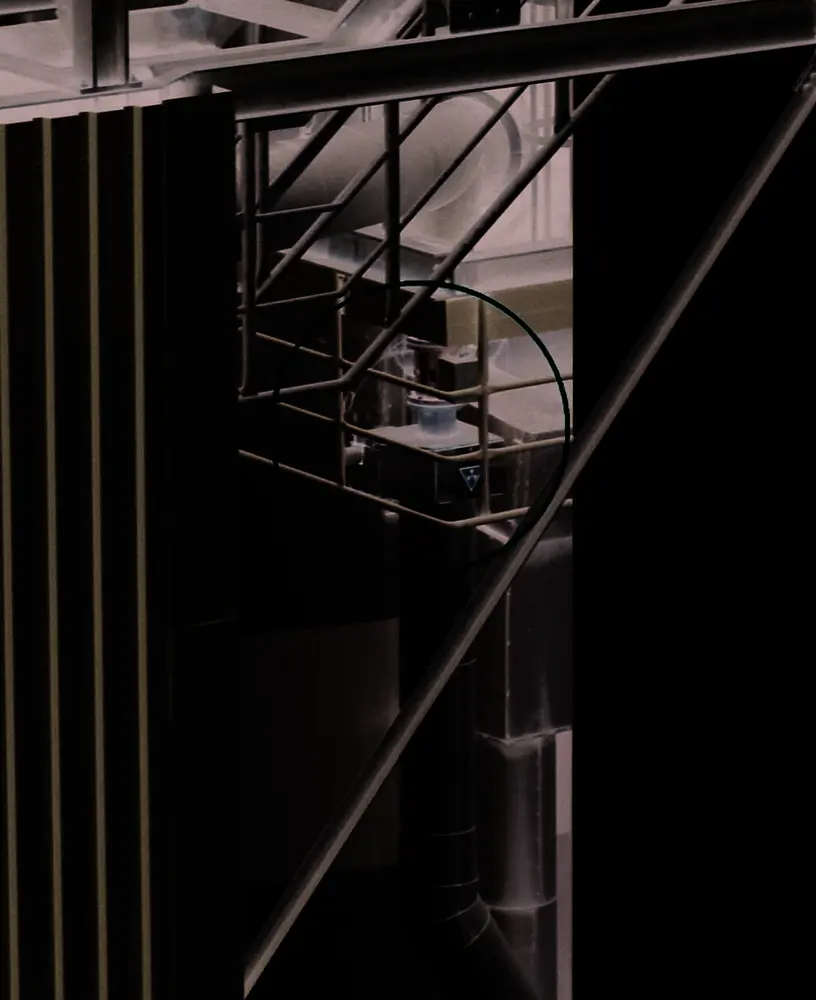
Fly ash truck loading
For a vertical DN200 drop line up to 150 t/h and 5–7 m/s product velocity, the published result is 1.4% of actual value.
Source note: Images and results come from manufacturer application documents. These percentages are not guaranteed for a new plant; define acceptance criteria for the specific application.
Infomak's technical selection approach
Infomak combines MÜTEC and DYNA Instruments technical information with bulk solids process experience to help preselect a suitable measuring principle. We review material, line drawing, capacity range, process photos and reference weighing options; final device and configuration follow manufacturer application review.
Frequently asked questions
How is solids mass flow measured?
Mass flow is mass per unit time. Systems evaluate moving-particle signals, concentration and velocity, or chute mass and velocity. Conversion to kg/h or t/h depends on the principle's commissioning method.
Can the same meter serve pneumatic conveying and free fall?
Some principles suit both, but velocity, concentration and distribution differ. Verify model, mounting and calibration for each line.
Does mass flow measurement require calibration?
MF 3001 / DYNA M-flow and DYNAmas require in-process reference calibration. For patented DYNAchute, the manufacturer states no product calibration is needed; mechanical setup and acceptance checks remain necessary.
Can 4–20 mA carry kg/h information?
Yes, if the mass-flow system is commissioned and correctly scaled. 4–20 mA may carry kg/h or t/h, but another device may use it only for relative trends. Check PLC scaling and measured quantity together.
Do moisture or density changes affect measurement?
Effects depend on principle and change magnitude. Check calibration against an independent reference when recipe, moisture, density or grain structure changes.
Why is DYNArad considered last?
DYNArad uses radiometric gamma transmission. First assess MF 3001 / DYNA M-flow, DYNAmas and DYNAchute for suitable free-fall duties; consider DYNArad if conventional methods cannot meet conditions.
Related products and technical information
Let us determine the right measurement principle for your application
Share material and line details in the selector to start the technical preassessment.
Go to the selector